TL;DR:
Many businesses are shifting to cloud video surveillance in 2026 to gain centralized access, meet insurance and compliance requirements, extend footage retention, secure remote sites, or replace aging hardware, often starting small and scaling up with platforms like Videoloft.
For many enterprise organizations, video surveillance still feels stuck in the past – even as AI, cloud and automation continue to accelerate in 2026. Despite all the innovation, many businesses are still relying on NVRs (network video recorders) that live on-site, require manual maintenance, and come with a growing list of headaches.
If your organization has multiple locations, managing security footage across all those sites can feel like juggling a dozen disconnected systems, none of which play nicely together. And in 2026 that’s a problem that doesn’t need to be there.
In this updated 2026 guide, we’ll explore six persistent problems enterprises still face with NVRs – and why cloud CCTV is the smarter, more scalable path forward.
1. Limited remote access
Traditional NVRs are typically installed locally at each site. Remote access, when available, depends on VPNs and port forwarding. That might work for a handful of locations, but it breaks down quickly as you scale.
Logging into individual NVRs for each site becomes a logistical nightmare and managing this kind of infrastructure across dozens, or hundreds, of locations eats into valuable IT resources.
Why cloud wins:
Cloud based VMS (Video Management System) platforms like Videoloft deliver seamless, secure remote access to video footage from any device, anywhere. No firewalls to configure. No VPNs to maintain, no port forwarding. Just centralized, real time access across all your locations. Your teams can respond faster, collaborate better, and focus on what matters.

2. Hardware failures
NVRs are vulnerable to hard drive failures, power surges, overheating, and network interruptions. In many environments, like warehouses, retail stores, or outdoor installations, these risks are amplified.
When an NVR fails, footage is often lost permanently. That’s more than just a technical failure, it’s a compliance risk and a liability.
Why cloud wins:
With a cloud CCTV system, video is streamed directly to secure, off site storage in real time. That means even if on-site equipment fails, your recordings remain intact.

3. Scalability issues
Every time your business adds a location, traditional surveillance means adding a new NVR, configuring it, connecting cameras, and maintaining it. Multiply that by 10 or 100 locations, and your infrastructure becomes a web of incompatible hardware and software.
IT and security teams are left to cobble together solutions with limited visibility and little control.
And it’s not just about the number of locations, it’s about the volume of video data. Over 90% of organizations expect their volumes of surveillance data to grow in 2024 (Wasabi Cloud Storage Index). This highlights the rising demand for scalable, flexible cloud storage that can adapt as surveillance needs expand.
Why cloud wins:
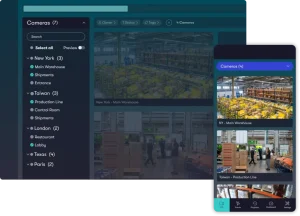
Cloud VMS platforms make scalability simple. Add a new site or camera in minutes, not days. With Videoloft, there’s no need for site-specific hardware.
4. Security gaps
Many on site NVRs operate in the background, mostly unmonitored by IT, and rarely receive timely firmware updates. They’re often deployed with weak passwords, exposed to open network ports, and left outside the scope of regular security audits.
In today’s enterprise environments, where cybersecurity is everyone’s responsibility, unmanaged devices like NVRs create real risk. Without centralized controls, it’s nearly impossible to enforce access policies, apply encryption, or monitor system integrity across all sites.
Why cloud wins:
Cloud-based VMS platforms like Videoloft are built with modern security principles in mind. That means encrypted video streams, automatic software updates, role based access control, and support for single sign-on (SSO).

5. Lack of visibility across locations
Need to find footage from three different locations at once? You’ll have to log into three different NVRs, download video, and scrub through it manually. This approach wastes time, introduces errors, and slows down investigations.
Why cloud wins:
Modern cloud VMS systems centralize your video surveillance. Search and playback across all locations from a single dashboard. Want to see every motion event from warehouse entrances across your organization in the last 24 hours? Done in seconds.
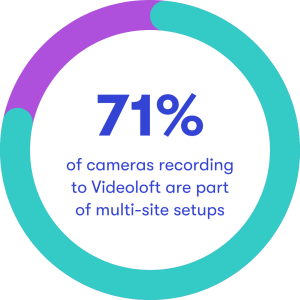
And this isn’t hypothetical, 71% of cameras recording to Videoloft are part of multi-site setups, meaning the platform is built from the ground up to centralize access to footage, no matter where it’s captured. Whether you’re managing 3 or 3000 locations, you get full visibility without the chaos of disjointed logins or systems.
6. Storage retention limitations
NVR based storage is often rigid, limited by local drive capacity and inflexible retention rules. For enterprises balancing compliance requirements and data privacy policies this creates a serious challenge.
Why cloud wins:
Cloud based storage gives enterprises the flexibility to choose the retention period that fits their business, not their hardware. Whether you need footage for 7 days or 7 years, the cloud allows you to store video for as long as you need, no bulky hardware upgrades, no compromises.
Among Videoloft customers, flexibility in retention is key:
- 30 day cloud storage is the most popular plan, making up just over 40% of all licenses.
- But longer term storage is accelerating, 90 day and 365+ day options now account for almost 30% combined.
This shift underscores that enterprises aren’t just scaling up, they’re planning for long-term video retention and regulatory readiness. With the cloud, it’s simple to adjust retention policies as your needs evolve, without buying more hard drives or replacing outdated systems.

The business case for cloud is stronger than ever – especially in 2026
These six pain points: remote access, fragile hardware, poor scalability, weak security, lack of visibility and poor retention periods, are all symptoms of one root issue: outdated, on premise infrastructure.
NVRs made sense a decade ago. In 2025, they’re holding organizations back.
Yet despite the clear advantages of moving to the cloud, just 35% of video surveillance data is currently stored in the public cloud (Wasabi Cloud Storage Index) . The majority is still kept in traditional on-premises systems, leaving most organizations with video surveillance systems that are vulnerable, inflexible and hard to scale.
A cloud CCTV upgrade offers:
- Faster deployments
- Lower total cost of ownership
- Centralized management
- Improved security
- Resilience and redundancy
- More efficient IT and security teams
Videoloft bridges the gap between your existing cameras and the cloud. With a plug and play Cloud Adapter, you can keep your current hardware, and gain all the benefits of a modern cloud VMS.
NVR problems 2026: Frequently asked questions
Why are NVRs obsolete for enterprise use?
NVRs weren’t designed for today’s multi-site enterprise environments. They’re hardware bound, difficult to manage remotely, and vulnerable to failure. In 2026, enterprises need agility, resilience, and real time access – things NVRs just can’t provide at scale.
Are hybrid deployments replacing NVRs entirely?
Increasingly, yes. Many enterprises in 2026 adopt hybrid models that combine limited local caching for bandwidth optimization with secure cloud backup for resilience and compliance.
What challenges do IT teams face with onsite recorders?
IT teams struggle with hardware failures, VPN troubleshooting, firmware patching and complex scaling. Maintaining a fleet of NVRs across multiple sites is not just inefficient, it’s a distraction from higher value IT projects.
How do cloud solutions solve NVR issues?
Cloud VMS platforms eliminate the need for onsite recorders, centralize access and control, improve video retention reliability, and dramatically reduce the complexity of scaling surveillance across locations. They also offer better security, automated updates, and deeper insights.
Can existing analog or IP cameras be used with a cloud VMS?
Yes. Solutions like Videoloft are designed to integrate with most existing analog or IP cameras. A Cloud Adapter bridges the gap between your legacy hardware and the cloud, allowing you to modernize without the cost of a full rip and replace.
How do cloud VMS systems compare to traditional NVRs in terms of cost?
While traditional NVRs may appear cheaper upfront, they come with hidden costs, like hardware replacement, site visits, and risk of footage loss. Cloud VMS systems like Videoloft offer up to 45% lower total cost of ownership (TCO) over time through centralized management, fewer hardware failures and a reduction in site visits.
Is cloud video storage secure enough for enterprise use?
Yes, enterprise grade cloud VMS platforms use advanced encryption, role-based access controls, and compliance certifications like SOC 2 and GDPR to secure footage.
How quickly can enterprises migrate from NVRs to the cloud?
With a solution like Videoloft, migration can be done in hours. There’s no need to rip out existing cameras or overhaul infrastructure. Simply connect the cameras to a Videoloft Cloud Adapter and begin streaming securely to the cloud. (link to how to transition from onsite to cloud article when it’s published)
The bottom line
NVRs may have helped define the early days of video surveillance, but in 2026 they’re more of a liability than a solution. For enterprises that need flexibility, resilience, and visibility at scale, the move to cloud video is inevitable.